

Wi-Fi 7, formally known as IEEE 802.11be, is the latest generation of Wi-Fi technology. It delivers extremely high throughput (theoretical peaks up to tens of gigabits per second) along with improved capacity and low latency using features like 320 MHz ultra-wide channels, Multi-Link Operation (MLO), and 4096-QAM modulation. The Wi-Fi Alliance began certifying Wi-Fi 7 products in early 2024, signaling official adoption of the standard. Today, Wi-Fi 7 support spans a wide range of devices – from consumer electronics to enterprise gear and industrial IoT endpoints – thanks to rapid advances in chipsets and certification programs. Below we break down what types of devices support Wi-Fi 7 (802.11be) as of 2024–2026, covering all major categories without speculating on unconfirmed models.
Modern smartphones are among the early adopters of Wi-Fi 7. Flagship mobile chipsets introduced in 2022–2023 began including Wi-Fi 7 radios, enabling handset makers to build Wi-Fi 7 capability into premium phones. By 2024, several flagship smartphones from leading manufacturers shipped with Wi-Fi 7 hardware on board. In some cases, the functionality was initially dormant pending software updates or certification, but the hardware support was present. This means if you bought a top-tier smartphone in late 2023 or 2024, it likely has Wi-Fi 7 compatibility.
Beyond phones, other mobile devices are following suit – advanced tablets and emerging wearable or XR devices are expected to adopt Wi-Fi 7 as well, especially to leverage its low-latency, high-bandwidth links for applications like AR/VR streaming and untethered high-definition media. Overall, the smartphone ecosystem is moving quickly to integrate Wi-Fi 7, ensuring mobile users can benefit from faster, more reliable connectivity as Wi-Fi 7 networks roll out.

Laptops and PCs are also embracing Wi-Fi 7. The PC industry typically refreshes wireless adapters with each generation, and Wi-Fi 7 is becoming standard on new high-performance machines. Major processor vendors have integrated Wi-Fi 7 into their latest platforms, and next-generation laptop CPUs began including built-in Wi-Fi 7 connectivity as a default feature.
A typical Wi-Fi 7 laptop can achieve multi-gigabit wireless speeds, roughly 2–3× faster than peak rates of Wi-Fi 6/6E laptops. This has made Wi-Fi 7 standard on premium notebooks and gaming laptops, often alongside support for the 6 GHz band and advanced antennas. Desktop PCs are also adopting Wi-Fi 7 with PCIe add-in cards and motherboards with Wi-Fi 7 chipsets. Most new high-end laptops, 2-in-1s, and desktops now offer Wi-Fi 7 compatibility.

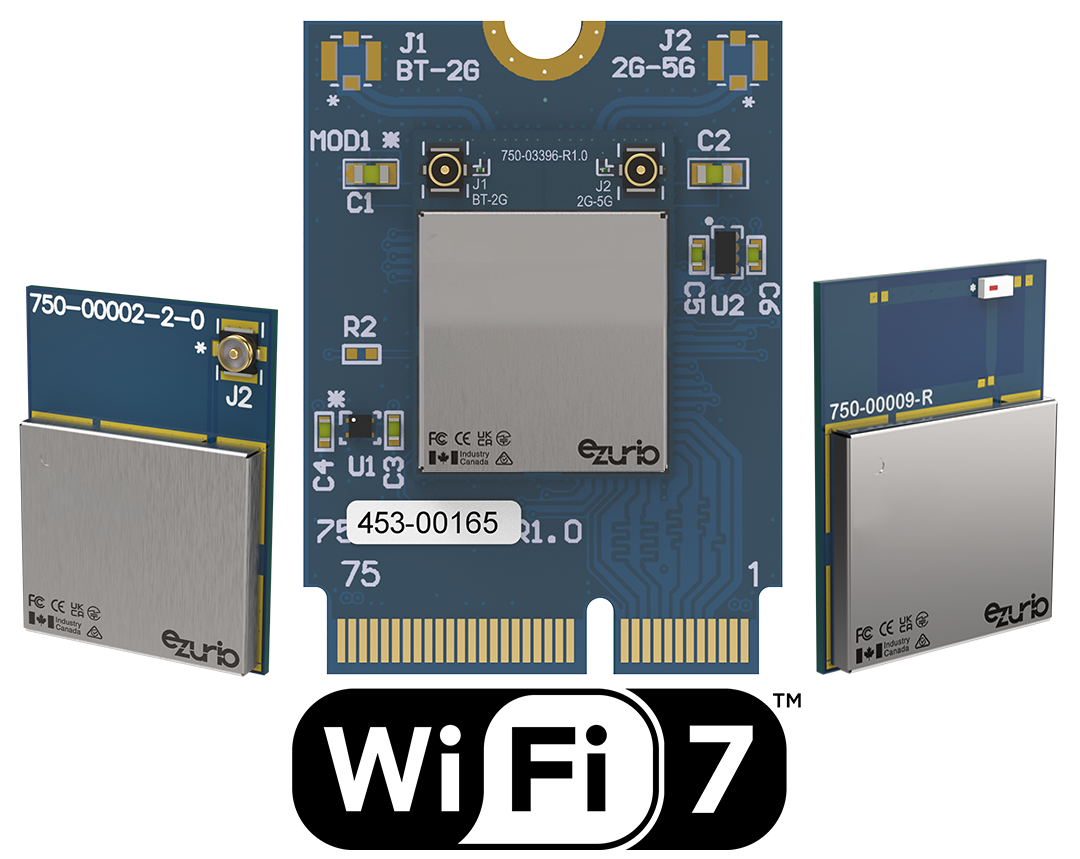
Introducing the first members of the Sona™ Wi-Fi 7 product line from Ezurio, the IF703 and IF713, based upon Infineon’s AIROC™ ACW741x chipset. These industrial IoT modules are low power, rugged, compact, globally certified, and designed for reliable connectivity with easy integration.
They are purpose-built for industrial IoT connectivity with SDIO Wi-Fi and UART Bluetooth host interfaces, industrial temperature range support, latest generation Wi-Fi and Bluetooth®, optional 802.15.4, and both pluggable card and SMT M.2 packaging.
Wireless routers and mesh systems were among the first device categories to support Wi-Fi 7. Several networking manufacturers announced Wi-Fi 7 routers based on draft standards as early as 2022, with retail units available by early 2023. These tri-band routers introduced Wi-Fi 7 capabilities to home networks well before the standard was finalized.
Today, a growing selection of Wi-Fi 7 routers is on the market, including standalone gaming routers and whole-home mesh Wi-Fi 7 systems. They typically feature 2.4 GHz, 5 GHz, and 6 GHz radios and often include multiple multi-gigabit Ethernet ports. Mesh Wi-Fi 7 systems use the 6 GHz band or multi-link operation for high-speed wireless backhaul between nodes, improving coverage and stability in large homes.

Enterprise networking equipment is rapidly adopting Wi-Fi 7. Major wireless LAN vendors have introduced Wi-Fi 7 access points for business and campus environments. These enterprise-grade APs support 2.4, 5, and 6 GHz bands simultaneously and are designed to handle dense deployments.
They are engineered to deliver ultra-reliable, low-latency wireless needed for mission-critical uses like wireless VR training, high-density conferencing, and real-time automation. Businesses deploying Wi-Fi 7 infrastructure typically upgrade to multi-gig Ethernet switches and higher Power-over-Ethernet budgets to support performance requirements.

Wi-Fi 7 is expanding into IoT and industrial devices. Traditionally, many low-power IoT gadgets operated on narrow channels to save power. With Wi-Fi 7, even 20 MHz-only devices can be certified, enabling sensors, wearables, cameras, and smart appliances to benefit from improved efficiency and reliability.
On the industrial side, Wi-Fi 7 plays a key role in factories, logistics, and healthcare. Features such as Multi-Link Operation and 4096-QAM boost reliability and throughput, which is critical for real-time automation, robotics, and AI-driven manufacturing systems. Expect Wi-Fi 7 connectivity in everything from smart homes to industrial sensors and autonomous systems.

In summary, Wi-Fi 7 support now spans virtually every major device category. Confirmed Wi-Fi 7 devices include smartphones, laptops, routers, smart TVs, enterprise access points, and industrial IoT equipment. With certification programs expanding, Wi-Fi 7 adoption is accelerating across consumer, business, and industrial markets.
Learn More about Ezurio Wi-Fi + Bluetooth Modules
Get in touch for orders or any queries: sales@rfdesign.co.za / +27 21 555 8400
Courtesy of Ezurio