
What Really Makes IoT Scale? Lessons I’ve Learned Building RAKwireless
By Ken Yu, Founder & CEO of RAKwireless
This article is based on a talk I shared recently with the IoT community at the IoT Tech Expo in the UK.
After more than 20 years working in communications and IoT, the question that drives me isn’t:
“What’s the next big gadget?”
It’s something much more fundamental:
Why do so few IoT projects reach true scale, while others go on to transform industries?
At RAKwireless, we’ve worked with thousands of customers around the world. We’ve seen incredible innovation, ambitious pilots, and breakthrough ideas.
But we’ve also seen something very consistent:
Scale is rare.
And when it happens, it’s never an accident.
Today, instead of talking about a single product, I want to share what I’ve learned about the decisions and patterns that actually change outcomes in IoT, and what it really takes and how to scale IoT deployments from prototype to millions of deployed devices.
From Prototype to Scale: The Journey of IoT Device Deployment Most Projects Never Complete
When people talk about IoT scaling success, they often focus on technology.
But in reality, the hardest part of IoT isn’t building the first device.
The hardest part is building something that lasts.
Internally, we often think about IoT customers in three stages:
- POC (Proof of Concept)
- MOC (Meaningful Operation)
- Scale (Hundreds of thousands, even millions, of devices deployed)
Most companies can build a proof of concept.
Some make it into a meaningful operation.
But the truth is:
Scale customers are rare.
That’s why we spend so much time studying them, not just what technology they use, but how they think, what decisions they make early, and what they do differently.
Because hidden inside those stories are lessons the entire industry can learn from.
A Customer Story That Changed My Perspective: Halter
One of the most impressive examples I’ve seen is a company called Halter.
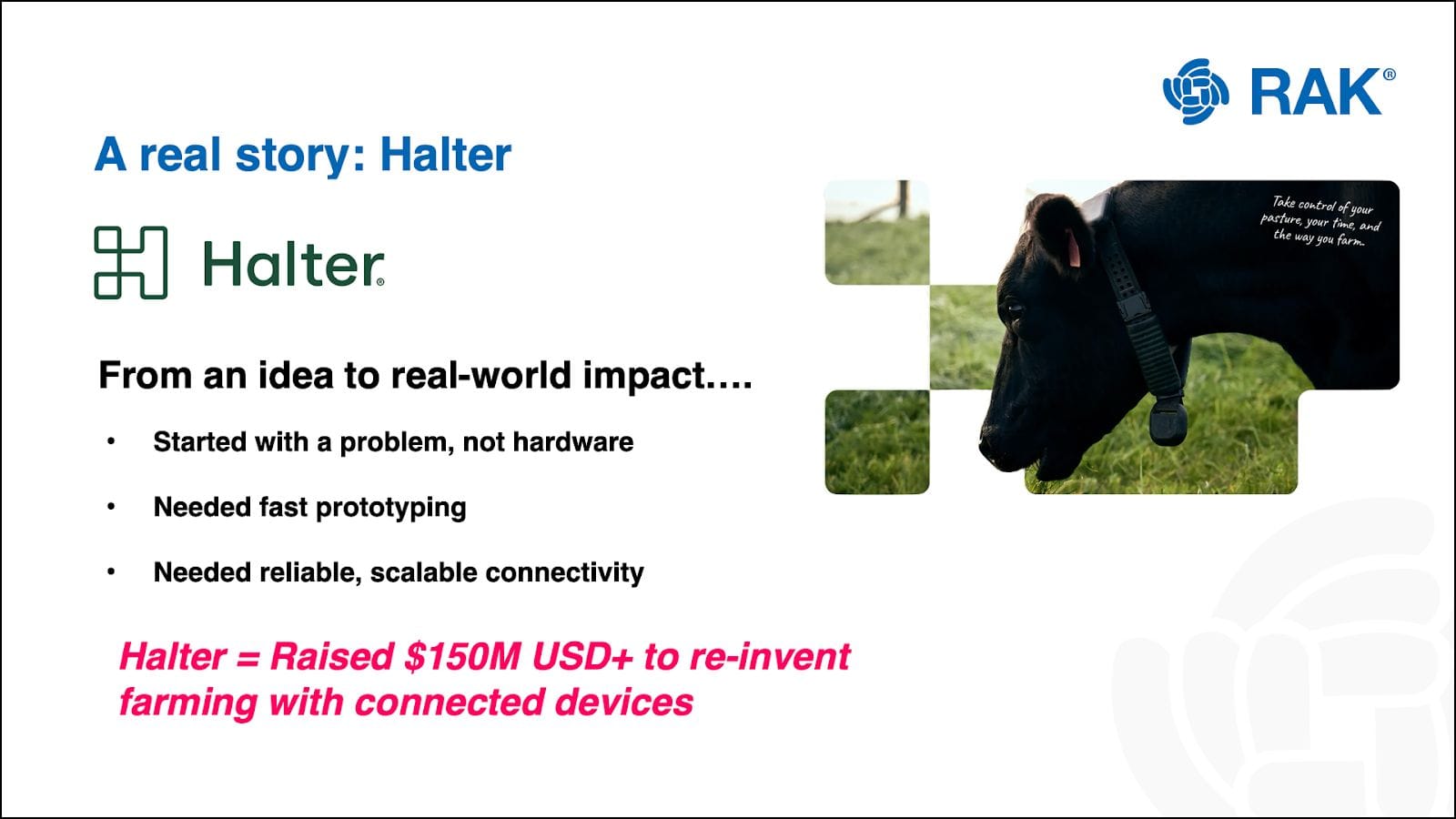
Last year, they raised over $150 million, and they are clearly one of the most successful IoT companies today.
They use LoRaWAN®, a Low-power wide-area network technology, but what impressed me most was not the wireless technology.
It was something much deeper:
They were designing for scale from the very beginning.
When they finished their proof of concept, they weren’t celebrating the pilot.
They were already preparing for mass deployment.
One simple example stayed with me:
They standardized tower heights across deployments.
That might sound like a small operational detail.
But that decision dramatically reduced complexity later, in installation, maintenance, troubleshooting, and after-sales support.
And that is often what scaling is really about:
Winning through operational clarity, not just technical novelty.
Halter also openly shares their early experiments, including the many POCs that came before success.
Their story is proof that scaling isn’t a straight line.
But the key takeaway for me is this:
They did not stop investing after POC success.
They kept building.
The Hard Truth: IoT Is a Full-System Challenge
Halter succeeded because they didn’t treat IoT as a device problem.
They treated it as a system problem.
Whether the connectivity layer is cellular, WiFi, or LPWAN, scale depends on how the entire system is designed.
They built a large team.
They focused on one device, one solution.
And they controlled the full chain:
- Hardware
- Network
- Deployment
- Troubleshooting
- Operations
This is an important truth:
IoT is hard.
And when you scale, controlling the full system becomes critical for IoT network scalability.
At small scale, you can improvise. At large scale, improvisation becomes failure.
What We Believed When We Started RAKwireless
In many ways, RAKwireless was shaped by the same realization.
When we started the company, we had three core beliefs that still guide us today.
- 1. Deployment Experience Matters
Many people on our team came from large-scale networking backgrounds.
We understood what it takes to ship millions of devices, and that experience taught us that scaling is not only about engineering.
It is about logistics, support, maintenance, and repeatability.
- 2. Democratization Would Be the Future
Early on, we saw a clear long-term trend.
Instead of closed, chip-on-board solutions, the future would belong to modular platforms designed for developers.
We chose a different path.
Make IoT more accessible, more open, and more buildable.
- 3. Deployment Knowledge Should Become Tools
We did not want to build hardware alone.
We wanted to turn our deployment experience into toolchains — systems that help others scale faster.
Because in IoT, tools often matter more than features.
Building More Than Hardware: A Complete Experience
Over time, these beliefs shaped our product philosophy.
Our strategy is simple to explain, but hard to execute:
- On one axis, we go deeper into real vertical applications
- On the other axis, we build dedicated toolchains
That includes:
We don’t just sell open hardware.
We try to deliver a complete experience.
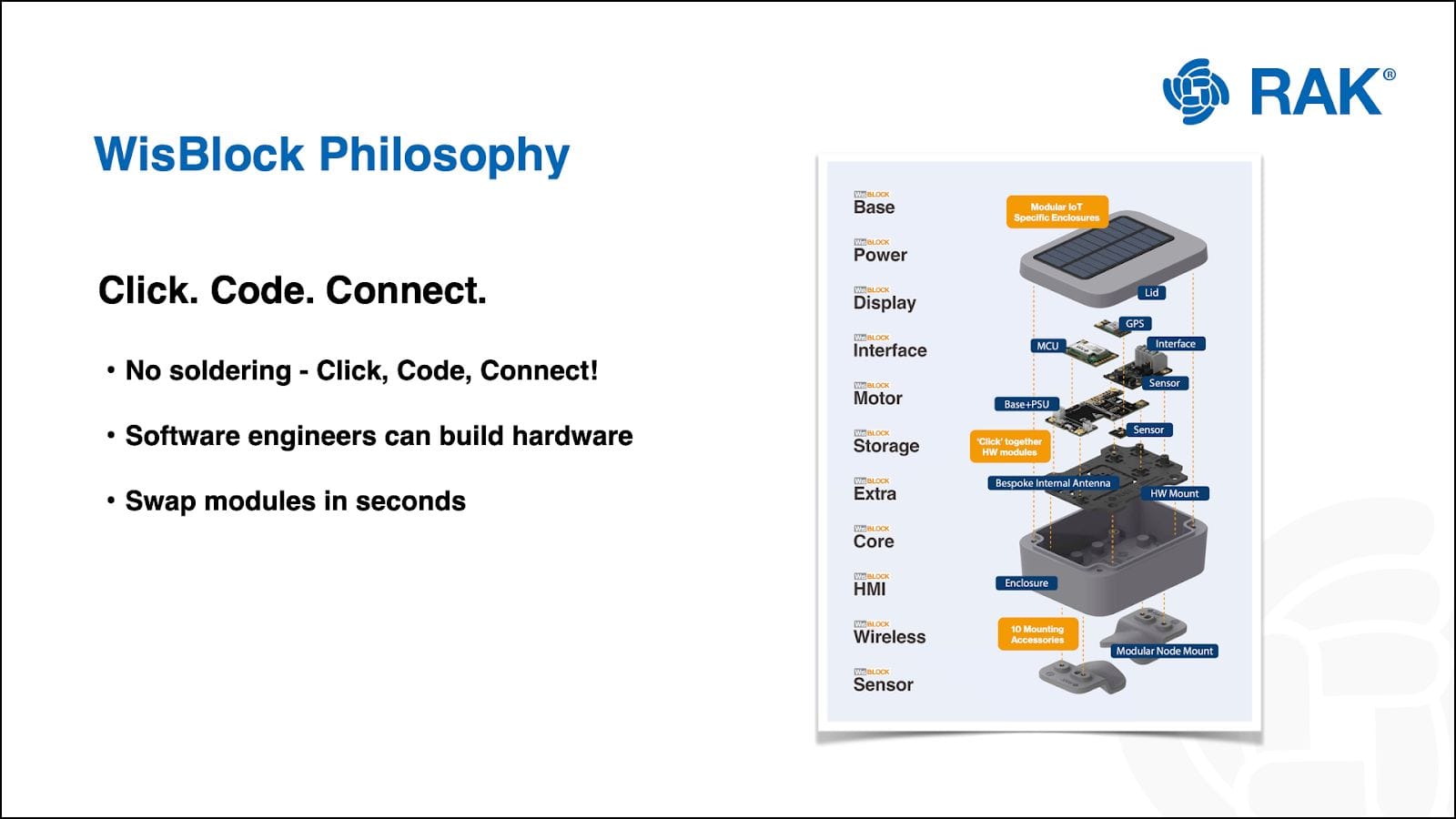
WisBlock is one example of this thinking: modular building blocks designed not only for prototypes, but for scalable systems.
Why LoRaWAN’s Real Strength Is the Ecosystem
One of the strongest things about LoRaWAN is not only the spectrum.
It’s the ecosystem.
In our view, democratization equals an open ecosystem.
LoRaWAN reminds me of Wi-Fi in its early days:
- Interoperable devices
- Shared standards
- Faster innovation
- Lower barriers to entry
An open ecosystem allows more builders to participate — and that is how industries grow.
Small Details That Decide Whether Projects Scale
A small but very practical example is our partnership with The Things Industries.
Together, we launched zero-touch provisioning.
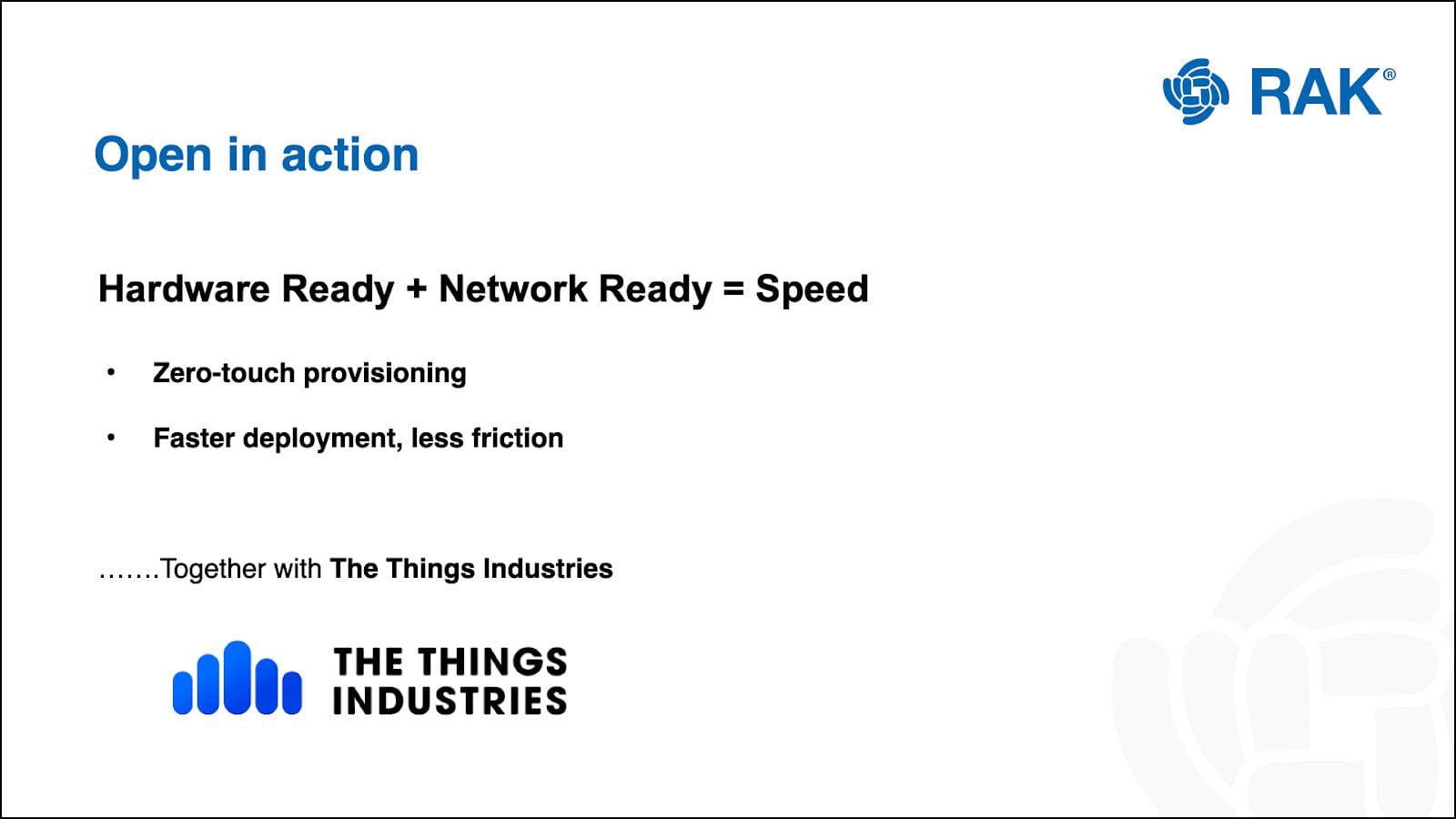
It sounds like a small feature. But for IoT solution builders, it saves enormous amounts of time and reduces deployment risk. And in the real world, scaling is often decided by small operational details like this.
Not by headlines.
Not by hype.
But by removing friction from deployment.
Our Goal: Helping Create the Next Halter
With all our investments in platforms, tools, products, and partnerships, our goal is simple:
To help create the next Halter.
To help more solution builders go beyond POC.
To help more companies reach meaningful operations.
And to help more IoT ideas become real, scalable networks that impact the world.
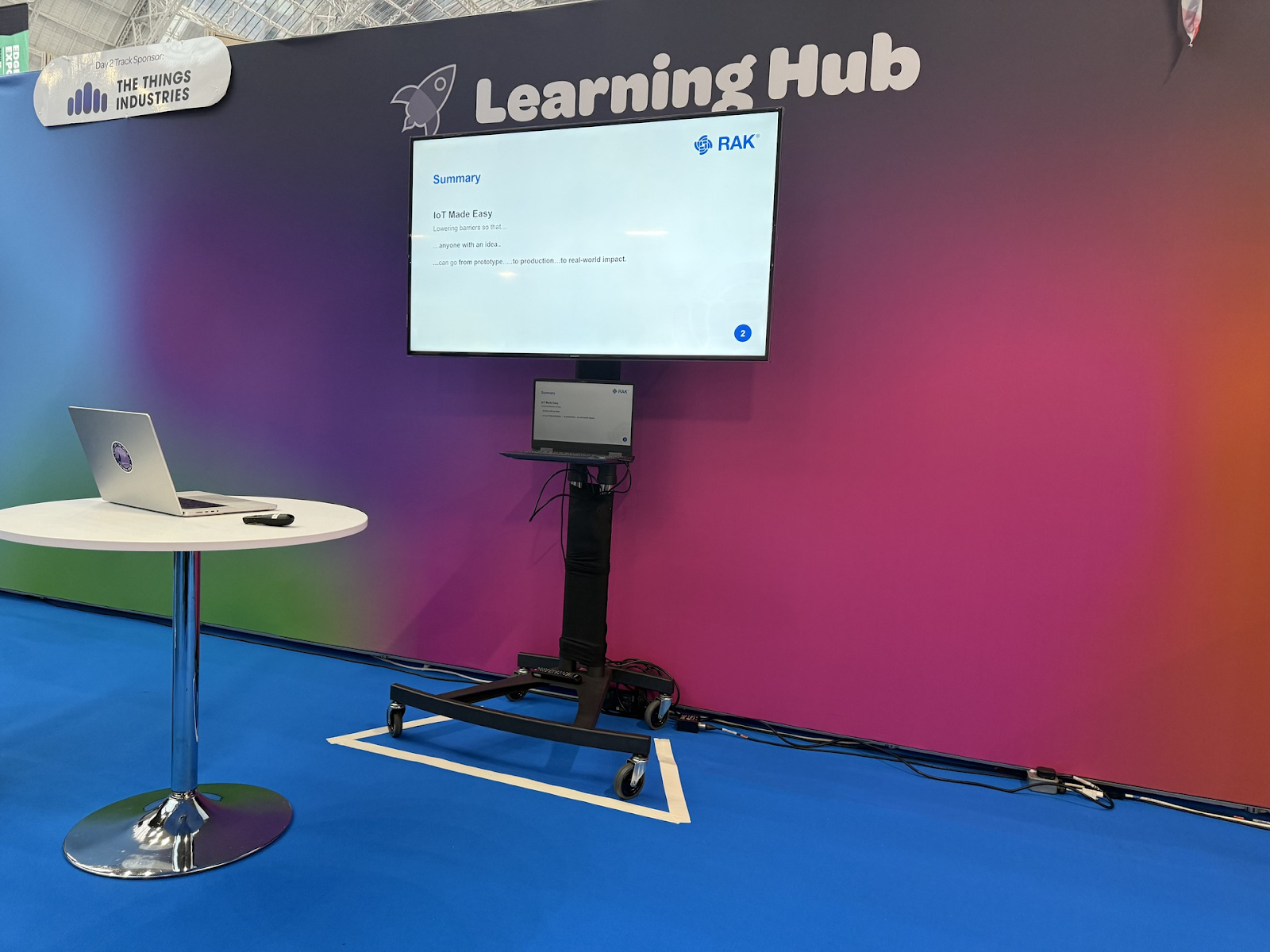
So when we say “IoT Made Easy,” it’s not just a tagline.
We believe that anyone with a good idea should have a real chance to take it from prototype to deployment to global scale.
Thank you for reading.
TL;DR
- Scaling IoT is rarely about building the first prototype. It is about designing the full system early, from deployment and operations to maintenance and ecosystem support. The companies that succeed at scale think beyond technology and focus on repeatable decisions that reduce complexity over time.
- At RAKwireless, our mission is to help more solution builders move from POC to meaningful operation and eventually global deployment, through modular tools, open ecosystems like LoRaWAN, and partnerships that remove friction from real-world scaling.
Courtesy of RAKwireless
