

Wireless at the checkout: how Wi-Fi™ 6E and Bluetooth® LE enable next-generation point of sale (POS) systems
Point of sale (POS) systems sit at the intersection of dense wireless environments, strict uptime expectations, and energy-sensitive hardware design.
Periods of POS downtime lead to revenue loss, operational disruptions, and expensive manual recovery. In busy retail environments, latency matters, and wireless interference is often the root cause behind failed or slow transactions. For engineers building next-generation POS devices, the ability to maintain reliable Wi-Fi and Bluetooth connectivity is no longer optional – it is fundamental.
This is the environment the u-blox MAYA-W3 module is designed to excel in.
The connectivity challenges of modern POS terminals
POS terminals are no longer simple checkout devices. They have evolved into mobile, cloud-connected platforms that handle payments, inventory synchronization, customer interactions, and real-time business operations. As POS systems become smarter and more connected, reliable wireless performance becomes critical – not only for transaction speed, but also for ensuring seamless communication with peripherals and back-end services.
Today’s POS devices typically need to:
- Authenticate payments in the cloud
- Sync orders and inventory
- Communicate with printers and scanners
- Support loyalty applications
- Operate across multiple wireless environments
But these features introduce several challenges:
High-density environments
Retail locations are saturated with Wi-Fi access points, mobile devices, and IoT equipment. Interference directly affects transaction speed and reliability. Wi-Fi 6E performance in dense environments is becoming a fundamental requirement.
Multiple wireless peripherals
POS accessories – receipt printers, barcode scanners, card readers – must maintain stable links even when the terminal moves. This makes reliable Bluetooth connectivity for POS peripherals essential.
Battery constraints
Handheld POS devices need to run through long shifts. Every milliwatt matters. Low-power connectivity is now as important as throughput.
Compact form factors
Sleek, ergonomic designs require smaller modules with more flexible antenna options.
Why wireless matters more than ever
In a POS system, wireless performance directly affects business KPIs: transaction speed, queue time, customer satisfaction, and operational efficiency. Even brief disruptions can trigger failed payments, frustrated customers, and lost sales.
Wi-Fi provides the backbone for cloud authorizations and back-end communication. Bluetooth enables seamless interactions with local accessories. Together, they form the foundation of the POS user experience.
Wi-Fi 6E: built for congested retail spaces
With OFDMA, MU-MIMO, and access to the 6 GHz band, Wi-Fi 6E provides higher throughput and reduced congestion by expanding into the 6 GHz band, even in busy checkout zones.
Bluetooth LE: stable peripheral connectivity
The latest generation of Bluetooth supports longer range, higher data throughput, improved efficiency, and lower power consumption, helping maintain reliable links with POS accessories.
For manufacturers designing payment terminals, kiosks, and mobile POS devices, these capabilities are no longer optional – they are expected.
Introducing MAYA-W3: a compact, low-power wireless module for POS
The u-blox MAYA-W3 module family addresses the key challenges of modern POS systems. With tri-band Wi-Fi 6E, Bluetooth LE (qualified against Bluetooth Core 6.0), and a compact 10.4 × 14.3 mm footprint, MAYA-W3 provides the performance, flexibility, and efficiency that next-generation POS devices require.
MAYA-W3 core features and benefits:
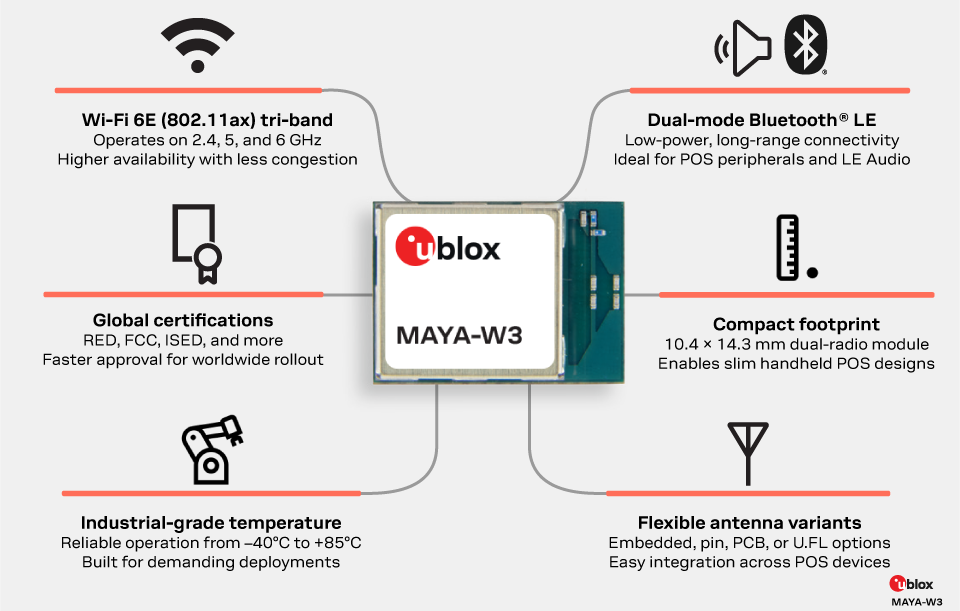
How POS devices benefit from MAYA-W3
Modern point of sale (POS) hardware is expected to deliver fast transactions, seamless peripheral connectivity, and reliable uptime – even in wireless environments filled with interference and competing devices. This is why selecting the right connectivity module is no longer just a technical decision, but a key factor in overall system performance and customer experience.
The MAYA-W3 module family addresses these challenges by combining tri-band Wi-Fi 6E and Bluetooth® LE 6.0 in a compact, industrial-grade design. Its key capabilities support higher network availability in congested retail spaces, stable low-power connections to accessories such as printers and scanners, flexible antenna integration across different device formats, and faster global deployment thanks to worldwide certifications.
Real-world applications across retail and hospitality
| Handheld POS in restaurants and cafés | Vending machines and kiosks |
 MAYA-W3 provides low-latency Wi-Fi for payments and stable Bluetooth links to receipt printers. MAYA-W3 provides low-latency Wi-Fi for payments and stable Bluetooth links to receipt printers. |
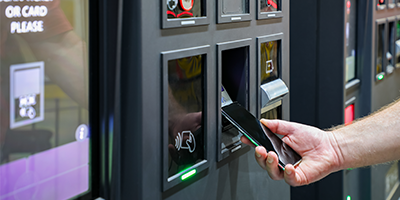 Tri-band Wi-Fi improves uptime and availability regardless of network congestion. Tri-band Wi-Fi improves uptime and availability regardless of network congestion. |
| Mobile payment terminals in retail | Self-checkout stations |
 Battery efficiency and compact size enable lightweight, portable designs. Battery efficiency and compact size enable lightweight, portable designs. |
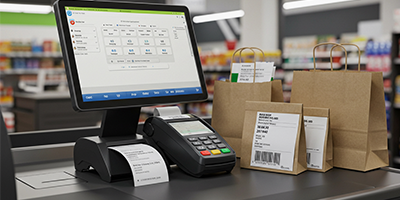 High throughput and interference robustness help maintain smooth operation during peak hours. High throughput and interference robustness help maintain smooth operation during peak hours. |
Conclusion: future-proof wireless connectivity for POS innovation
As POS devices become smarter, more mobile, and increasingly cloud-connected, wireless performance becomes a strategic differentiator. With Wi-Fi 6E, Bluetooth LE, low-power operation, multiple antenna options, and industrial-grade reliability, MAYA-W3 provides the robust, future-ready wireless foundation modern POS systems require.
Whether you’re designing handheld terminals, self-service kiosks, or compact payment modules, MAYA-W3 gives your device the connectivity needed to deliver fast, secure, and seamless checkout experiences – everywhere.
Check out how you can build your product design with MAYA-W3.
Stefan Berggren
Senior Product Marketing Manager
Product Strategy Short Range Radio, u-blox
Get in touch for orders or any queries:
sales@rfdesign.co.za / +27 21 555 8400
Courtesy of u-blox
%20systems)