

Energy storage capacitor banks supply pulsed power in high-current applications, including shockless compression and fusion. As capacitor bank technology advances with more precise switching and higher energy density, fast discharge capacitors can reliably support more advanced applications.
The energy storage capacitors selected for large banks must feature low inductance, high peak current, strong fault tolerance and excellent reliability over their lifespan. When specifying high energy capacitors, consider the following charge, hold and discharge profile for a capacitor in an RLC circuit (Figure 1).
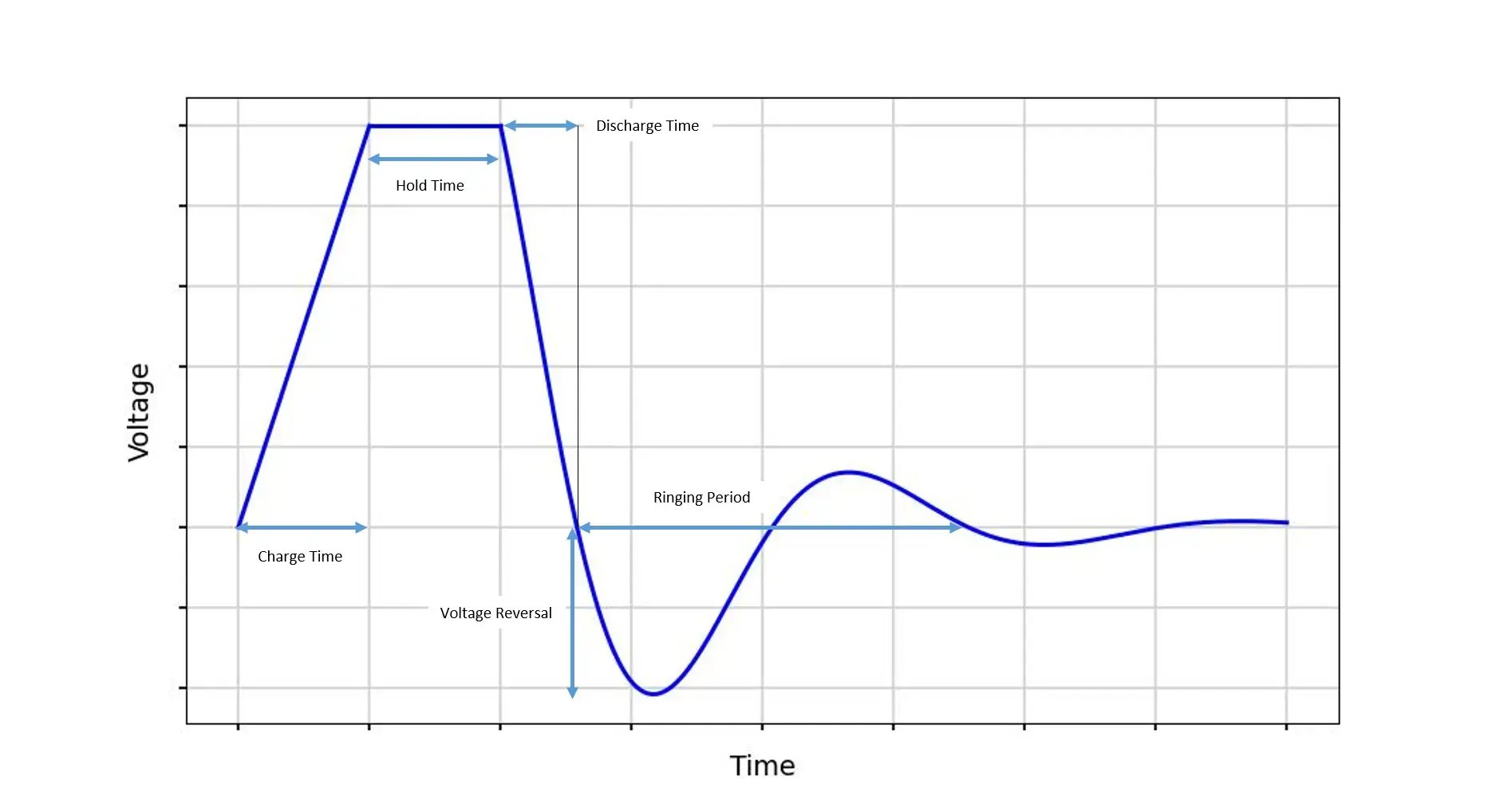
Figure 1: Hold and discharge profile for a capacitor in an RLC circuit
The following questions address crucial factors that influence capacitor performance, reliability and longevity in high-energy pulse applications.
By definition, the energy stored in a charged capacitor is:
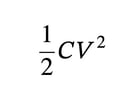
Where C is capacitance (F) and V is the charging voltage (V). Real-world factors influence this relationship, including charging method and efficiency. Knowles can assist in defining appropriate capacitance and voltage targets.
Power supply choice is a key design parameter. Regardless of the charging mode (constant voltage, current, power, or resonant), shorter charge time is preferred to avoid prefiring.
Hold time impacts safety and reliability and must be accounted for in the design process.
Discharge time is determined by RLC circuit parameters, so detailed circuit information is essential.
Damping effects in the RLC circuit may cause voltage ringing. Design criteria should consider this behavior.
Voltage reversal occurs due to parasitic inductance, causing oscillation between capacitance and inductance. Capacitors have specific tolerances for reverse voltage.
Shot life refers to the number of charge/discharge cycles a capacitor can endure. It depends on voltage reversal, temperature, frequency, and operating voltage.
The repetition rate should balance performance and longevity. Cooling and mechanical reinforcement may be required at higher rates.
Form factor, energy density targets, and operating temperature should also be considered when selecting capacitors.
Contact Knowles to discuss your requirements or read more on pulse discharge.
To learn more, download the Knowles radar components ebook.
Get in touch for orders or any queries: sales@rfdesign.co.za / +27 21 555 8400
Courtesy of Knowles