

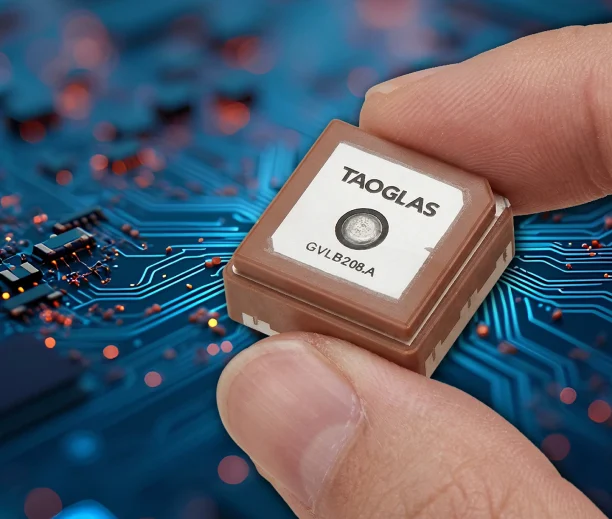
Choosing the right antenna early in the design process is critical for getting that device to market on time and on budget. Here are the top six considerations when comparing antennas and how to use AI to streamline that process.
The device’s applications determine which air interface it will use, and those determine which frequencies the antenna must support. Suppose the device will use cellular and Wi-Fi and needs an embedded antenna. Focusing on broadband antennas is a good way to start narrowing down the options.
An antenna that supports 400 MHz to 6 GHz covers every 4G LTE band and every 5G allocation up to the mid-band spectrum range, as well as the 2.4 GHz and 5.8 GHz Wi-Fi bands. This breadth also gives the OEM and its customers a level of future proofing because the device can be switched to a different operator to take advantage of better coverage or better tariffs.
Suppose the device’s applications require constant connectivity, such as telematics. Non-Terrestrial Networks (NTNs) such as Skylo or SpaceX/Starlink are an increasingly common way to maintain connectivity in places where cellular is unavailable, such as rural areas. Many LEO and 5G bands are close enough that a single antenna can cover both. That’s why modules that support both cellular and satellite have a single RF connector for the antenna.
Finding an antenna that meets these and other specific criteria used to require a lot of time and legwork scouring manufacturer websites. Taoglas recognized that challenge and created the AI Product Recommendation Engine to help engineers make faster, more confident decisions early in the design cycle. In this example, the process starts by entering “Embedded broadband antenna for 4G, 5G, and Wi-Fi” as the prompt.

Suppose the device’s applications require constant connectivity, such as telematics. Non-Terrestrial Networks (NTNs) such as Skylo or SpaceX/Starlink are an increasingly common way to maintain connectivity in places where cellular is unavailable, such as rural areas. Many LEO and 5G bands are close enough that a single antenna can cover both. That’s why modules that support both cellular and satellite have a single RF connector for the antenna.
By simply changing the initial prompt to “Embedded broadband antenna for 4G, 5G, Wi-Fi, and NTN,” engineers can get a revised list of options and criteria to narrow down the choices.
The device’s form factor affects the antenna’s form factor. That’s why it’s one of the AI Product Recommendation Engine’s first responses.

Suppose that SMD/Chip is selected. The AI Product Recommendation Engine would respond with two options.


Clicking on an antenna’s product number/name opens a new tab with its datasheet and other collateral. That information is critical for ensuring that the device design puts the antenna in the ideal position for maximizing performance and reliability.
Placement highlights the importance of making antenna decisions at the start of the design process. When it’s delayed to the point of being an afterthought, there’s a high risk that the PCB and/or entire device will need to be re-engineered, driving up development costs and delaying time to market.
For instance, processors, memory, batteries, and other components may need to be shuffled to free up PCB space not only for the antenna itself, but also its surrounding keep-out area. Another common problem is that the antenna is in the wrong board position to meet carrier certification requirements for signal strength, data throughput, and other performance criteria.
Every Taoglas antenna has an integration guide that includes placement instructions. Here are two examples from the PA.760.A WarriorX.


The ideal PCB location ensures that the antenna has the right amount of ground plane to meet gain and other performance requirements. Always consult the module’s collateral, too, because manufacturers specify the peak gain limits for antennas used with their products. (For more information, including the relationship with the keep-out area, see “Understanding Ground Planes for Cellular and GNSS Devices.”)
Taoglas integration guides include a table with performance specs such as efficiency, average gain, and peak gain for each band. As the PA.760.A WarriorX integration guide example shows, this table describes the ground plane used to measure those specs. This information helps engineers ensure that their PCB can accommodate that size right from the start, thus avoiding rework.

For more insights, see “Top Tips for Ensuring Your PCB Maximizes Antenna and Application Performance.”
The AI Product Recommendation Engine is part of the Taoglas AntennaXpert suite of tools, which also includes Antenna Integrator. This web-based application helps engineers optimize RF performance, component placement, and PCB size, while simplifying mechanical integration and reducing development time. Users input a custom PCB size and then select and place multiple Taoglas antennas on the digital board. Once configured, the design is submitted to Taoglas, and users receive a technical report within 24 hours that includes detailed antenna performance parameters, including return loss and efficiency.
Each mobile operator uses certification testing to ensure that a device meets its specific performance and network requirements. For example, to be certified for use on AT&T’s network, LTE NB-IoT devices must have antennas that support bands 24 and 12. NB-IoT and Cat M1 devices also must meet each operator’s total radiated power (TRP) and total isotropic sensitivity (TIS) requirements.
Get in touch for orders or any queries: sales@rfdesign.co.za / +27 21 555 8400
Courtesy of Taoglas