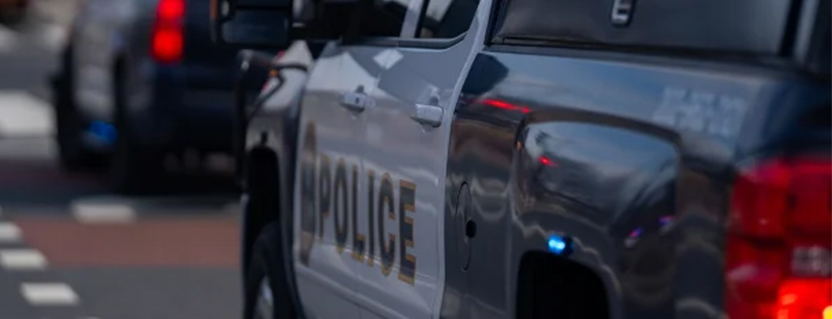
As wireless technology evolves, so the do the communications options for police, fire, and other first responder agencies in the U.S. Here are the top trends and technologies and what to consider when choosing and integrating antennas to take advantage of them.
The FirstNet network launched nationwide in March 2018 using 4G LTE in Band 14. The first public 5G networks debuted over the next 12 months, but 4G was still a solid choice for first responder applications. That’s because as a mature technology, LTE had time to ride down the cost curve and develop a broad, deep selection of devices.
Today, 5G is a mature technology and likely to remain the dominant one in terms of coverage, price points, and device selection well into the next decade because 6G probably won’t debut until 2030 at the earliest. That makes 5G the natural choice for agencies looking to upgrade to a technology that offers both higher performance than 4G and longevity.
In 2024, the First Responder Network Authority and its partner AT&T began an $8 billion, 10-year upgrade to 5G. The first major milestone was in April 2026, with the launch of 1,000 5G cell sites using the same Band 14 spectrum as LTE. These new sites are nationwide, with a focus on improving coverage in key locations.
“More than two-thirds are in rural and tribal areas,” the FirstNet Authority says. “In addition, the vast majority enhance coverage for key public safety locations like fire stations, police departments, courthouses and hospitals.”
It’s important to note that the new FirstNet 5G sites are backward compatible with 4G. FirstNet will continue to support 4G for at least the next decade, which gives agencies the flexibility to do a phased upgrade to 5G.
FirstNet and public cellular networks don’t always have enough capacity to handle surges in voice, data, and video traffic during major events such as the Super Bowl, the World Series, and concert festivals.
Portable cell sites provide additional short-term capacity and extend coverage to areas not reached by permanent infrastructure. They are also used when permanent sites are out of service after disasters.
These temporary sites are typically mounted on trailers and referred to as COWs, short for “cell on wheels.” FirstNet operates Satellite Cells on Light Trucks (SatCOLTs), Response Communications Vehicles (RCVs), and Compact Rapid Deployables (CRDs). The latest addition is LEO Cell Trailers (LCTs), which use Low Earth Orbit satellites for backhaul when terrestrial links are unavailable or overloaded.
Land Mobile Radio (LMR) technology has been used for nearly a century and remains popular among first responders due to Push to Talk functionality.
FirstNet offers two mission-critical PTT services:
Most public safety vehicles require antennas that support FirstNet, public 4G/5G, LMR, GNSS, and Wi-Fi. All-in-one antenna systems are often preferred because they reduce installation complexity and cost.
Get in touch for orders or any queries: sales@rfdesign.co.za / +27 21 555 8400
Courtesy of Taoglas
We use cookies to improve your experience on our site. By using our site, you consent to cookies.
Manage your cookie preferences below:
Essential cookies enable basic functions and are necessary for the proper function of the website.
Statistics cookies collect information anonymously. This information helps us understand how visitors use our website.
Google Analytics is a powerful tool that tracks and analyzes website traffic for informed marketing decisions.
Service URL: policies.google.com (opens in a new window)
Google reCAPTCHA helps protect websites from spam and abuse by verifying user interactions through challenges.
SourceBuster is used by WooCommerce for order attribution based on user source.