
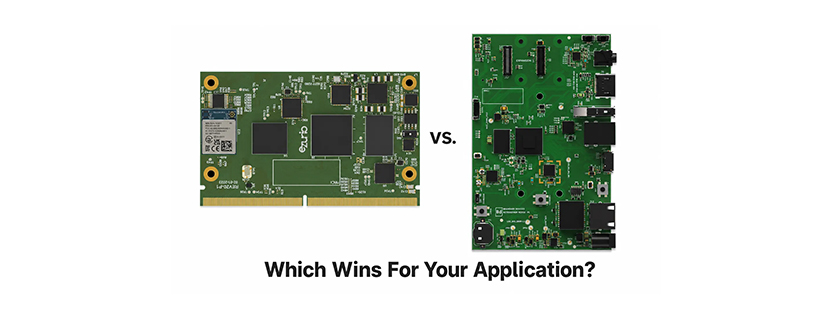
This decision between a System-on-Module (SOM) and a Single Board Computer (SBC) shapes your entire product.
When teams choose between a System-on-Module (SOM) and a Single Board Computer (SBC), they’re not only picking hardware. They’re defining how the entire product will be built, maintained, and scaled.
This decision affects:
On paper, both SOMs and SBCs provide a working embedded platform. In practice, they solve very different problems.
A SOM provides a pre-integrated compute platform while leaving system design under your control. The separation between the compute module and the carrier board is where much of the value lies.
One of the biggest advantages is removing the most difficult parts of board design. High-speed DDR routing, PMIC sequencing, and processor bring-up are already handled. These are some of the highest-risk areas in a chip-down design, both for signal integrity and debugging time.
For example, if you’re designing an industrial gateway that requires dual Ethernet, CAN-FD, and PCIe expansion, a SOM allows you to focus on those interfaces directly on the carrier board instead of debugging memory timing or boot issues.
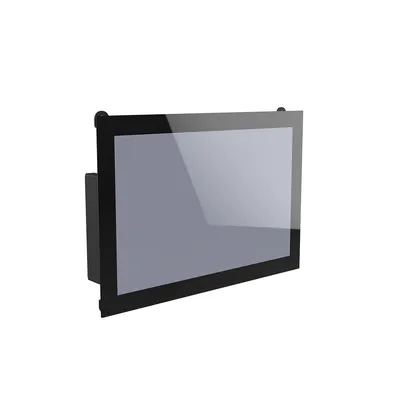
The flexibility becomes even more valuable when requirements evolve. A product that starts as a single-display HMI may later require:
With a SOM, these changes are typically managed at the carrier board level while the compute platform remains the same. This allows the software stack, bootloader, and validation work to carry forward.
It also creates a clear upgrade path. If the design uses a standard such as SMARC, moving from an i.MX 93 to an i.MX 95 SOM can often be a drop-in upgrade without requiring a full redesign.
This is why SOMs are commonly used in long lifecycle products such as medical devices, industrial controllers, and robotics systems.
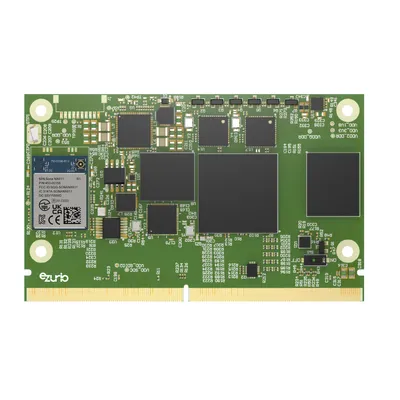
As Low As $99
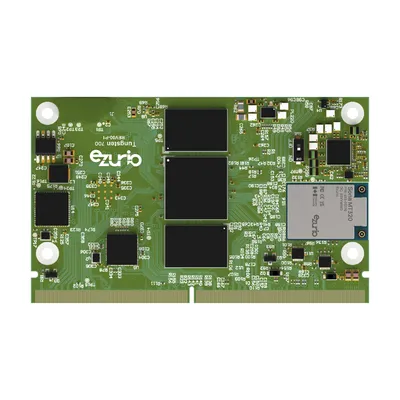
As Low As $96
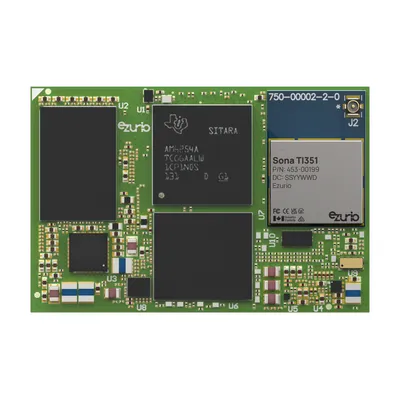
As Low As $42
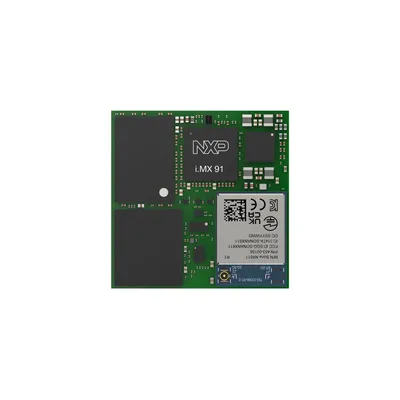
SBCs take the opposite approach. Everything is already integrated into a single board, which removes almost all hardware design work upfront.
This means engineers can move from power-on to application development immediately. For example, when building a proof-of-concept for a vision system, you can:
All without designing hardware.
SBCs also simplify validation. Interfaces are already laid out, power delivery is handled, and peripherals are known to work together.
However, limitations appear as requirements become more product-specific. If the enclosure requires connectors on a different edge, or if the board includes unnecessary interfaces, compromises become unavoidable.
A common example is the transition from prototype to production, where teams realize:
At that point, many teams move toward a SOM with a custom carrier board or a fully custom SBC design.
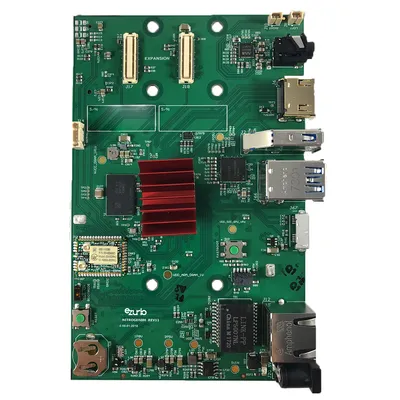
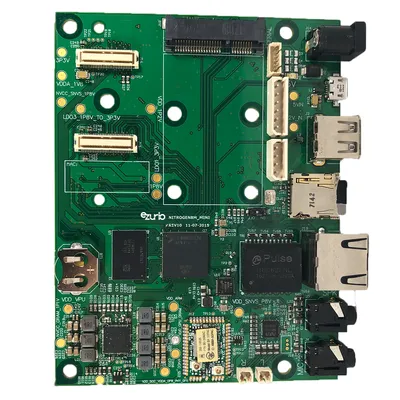
| SOM (System on Module) | SBC (Single Board Computer) |
|---|---|
| Control over exposed interfaces | Fixed interface set |
| Flexible signal routing | Fixed layout |
| Custom board size and form factor | Fixed form factor |
| Tunable power optimization | Fixed power profile |
| Selectable components and BOM | Fixed BOM |
This distinction extends beyond hardware and directly affects software reuse. SOM-based designs allow BSPs and drivers to remain consistent even as carrier boards evolve. Switching SBC platforms often requires partial or complete software reintegration.
Lifecycle planning is also different. If a component on an SBC reaches end-of-life, redesign options can be limited. With a SOM-based approach, the module vendor typically manages those changes while preserving the carrier board design.
The real cost difference is often not in the initial bill of materials, but in redesign cycles, validation effort, and long-term maintenance.
Many teams begin with a SOM for flexibility and faster development, then transition to a custom SBC once requirements are finalized.
At that stage, optimization becomes the priority:
For example, a medical device may start with a SOM-based development kit for rapid prototyping. Once validated, the final product can transition to a custom SBC with only the necessary interfaces and integrated wireless.
This approach avoids committing too early to a hardware architecture before requirements are fully understood.
Pre-built SOMs and SBCs can significantly reduce development time, often by 9 to 12 months, by eliminating much of the complexity associated with hardware and software bring-up.
Choose the right processor, memory, and I/O options to align with your project requirements. From concept through production, Ezurio works closely with customers throughout the development process.
Learn more about custom SBC solutions: Custom SBC
Many vendors stop at providing hardware. Ezurio takes a more complete system-level approach.
From an engineering perspective, this includes:
Where other vendors often create friction is during the transition from prototype to production. Ezurio provides a more continuous path from evaluation to deployment, helping reduce development time and integration risk.
Learn more about Ezurio SBC solutions: www.ezurio.com/sbc
Learn more about Ezurio SOM solutions: www.ezurio.com/som
Courtesy of Ezurio