
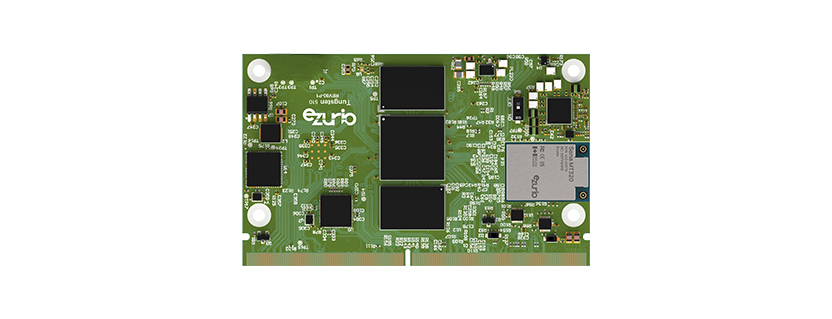
Find out where MediaTek Genio-based SOMs, Tungsten 510 and Tungsten 700, differentiate.
At Ezurio, there is no “one processor fits all” strategy. Multiple silicon platforms are supported because embedded systems have different constraints: power, graphics, camera requirements, AI workloads, cost targets, and lifecycle expectations. Most design challenges are not about raw CPU speed, but about system balance.
This is where MediaTek Genio-based SOMs stand out.
Modern embedded systems now run full Android or Linux-based graphical stacks. These workloads are latency-sensitive, where app launches, browser rendering, and touch interactions all compete for CPU time.
Cortex-A78 cores in Genio 700 improve responsiveness. Systems benefit from faster app launches, smoother scrolling, and fewer dropped frames. Chromium runs more reliably, and the UI remains responsive even during background tasks. This directly impacts user-facing products like kiosks, fitness equipment, and smart displays.
Driving a display is no longer enough—driving it well is key. Systems are expected to support 4K, maintain 60 fps, and handle layered UI elements and video overlays.
Genio 510 and 700 use Mali GPUs designed for balanced performance. This results in stable video playback, responsive UI at high resolutions, and enough GPU headroom for animations and WebGL, even in fanless designs.
This evaluation includes:
Learn more about Kynetics and their Embedded Android Developer Toolkit.
AI at the edge is now a requirement in many applications such as object detection, smart retail, and predictive maintenance.
Genio 700 integrates a multi-TOPS NPU for hardware acceleration. Combined with strong CPU and GPU performance, systems remain responsive even during AI workloads.
Without a dedicated VPU, video decoding can overwhelm the CPU, reducing performance and increasing heat.
Genio platforms include hardware video encoding and decoding, keeping workloads off the CPU. This ensures smooth 4K playback, stable UI performance, and efficient power usage.
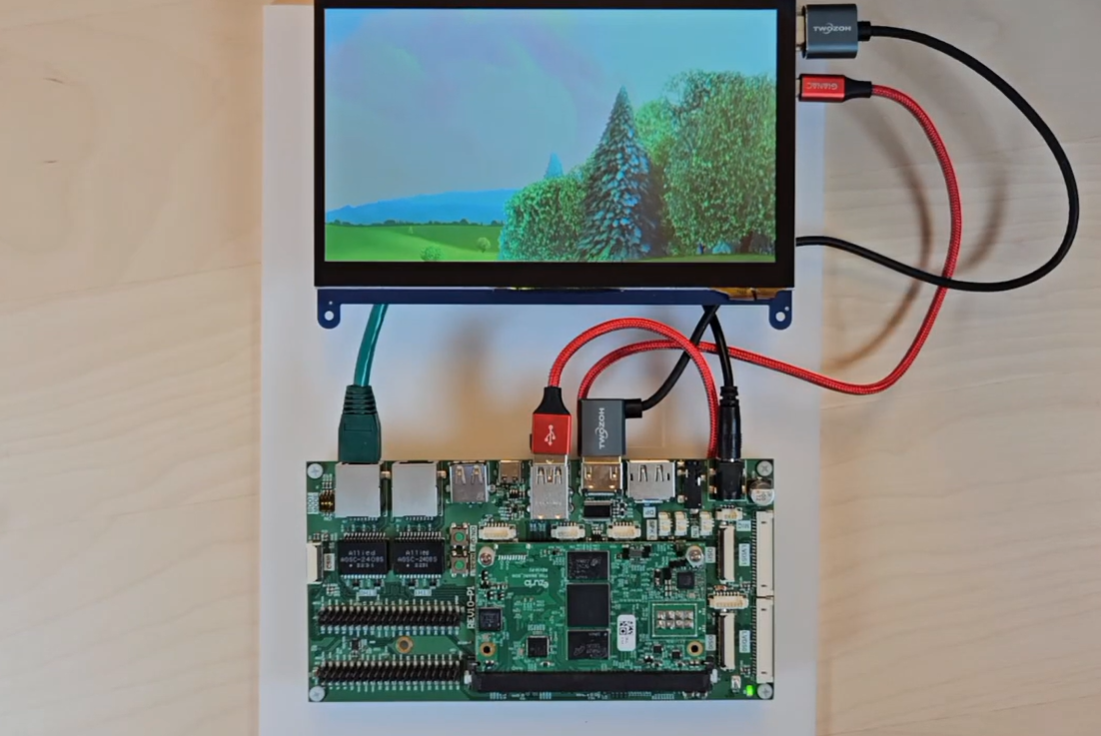
See the video capabilities of the Tungsten 700 with a 4K display.

Genio-based SOMs are ideal when systems must handle multiple demanding tasks simultaneously.
Choosing a SOM is about balancing CPU, GPU, NPU, memory bandwidth, and video acceleration under real workloads.
Genio 510 and 700 offer this balance, delivering strong performance, efficient thermals, and scalability for future features. This reduces design risk and minimizes the need for redesigns later.
Courtesy of Ezurio