New Taoglas FW.79.M6.F ISM/LoRa (700-900 MHz) Flexible Whip Antenna with M6(F) Connector Flexible Whip Antenna Covering: 700-900 MHz IP67 Rated Enclosure Dims: Ø14 x 65.8 mm Connector: M6 Female RoHS & Reach Compliant Overview The FW.79 is a compact, flexible whip antenna designed for reliable performance within the 700–900 MHz frequency band. Engineered with an...
Read More
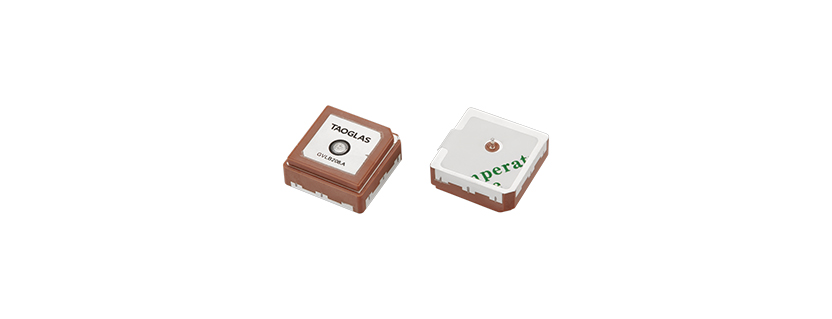
New Taoglas GVLB208.A Passive Multi-Band GNSS (L1/L5) Single Feed 20 x 20 x 8 mm Stacked Patch Antenna Easy to integrate Single Feed GNSS Patch Compact 20 x 20 mm Footprint Covering L1 & L5 Dims: 20 x 20 x 8 mm RoHS & Reach Compliant Overview GNSS L1 / L5 Passive Single-Feed Stacked Patch...
Read More
New Taoglas Active Multi-Band GNSS (L1/L2) 2 Stage LNA High Precision Patch Antenna 100 mm ø1.13, I-PEX MHF® I Active 2 Stage LNA GNSS Antenna Bands Covered: – BeiDou (B1C/B1I) – GPS/QZSS (L1/L2) – Galileo (E1/E5b) – GLONASS (G1) Overall Dimensions: 70 x 70 x 11 mm Cable: 100 mm of ø1.37 mm Coaxial Connector: I-PEX...
Read More
New Taoglas CGSP457 GNSS/SatCom (1542-1643 MHz) 45 x 45 x 7 mm Patch Antenna GNSS and SatCom Patch Antenna Covering Iridium L1, NTN n255 (UpLink and DownLink) Covering L1 & L5 Dims: 45 x 45 x 7 mm RoHS & Reach Compliant Overview GNSS and SatCom Patch Antenna 45 x 45 x 7 mm The...
Read More
New Taoglas Active Multi-Band GNSS (L1/L5) 2 Stage LNA 20 x 20 x 11.9 mm Stacked Patch Antenna 100 mm ø1.13, I-PEX MHF®I (U.FL) Single Feed Stacked Active GNSS Patch Covering L1 & L5 Dims: 20 x 20 x 11.9 mm Cable: 100mm of 1.13 Micro Coax Connector: I-PEX MHF I RoHS & Reach Compliant...
Read More
New Taoglas 433 MHz Ceramic SMD Antenna 30.0 x 10.0 x 5.0 mm Compact 433 MHz Ceramic SMD Antenna Frequency Range: 433 – 435 MHz Dims: 30.0 x 10.0 x 5.0 mm RoHS & Reach Compliant Overview The PA.433.A is a compact, high-performance ceramic SMD antenna designed for reliable wireless communication in the 433 MHz...
Read More
New Taoglas Ultima A.30.B Permanent Mount GPS/GLONASS/Beidou Ultima GPS/GLONASS/GALILEO Antenna Permanent Mount GPS/GLONASS/GALILEO – Total Gain 28 dB at 3.0 V GPS/GLONASS/GALILEO – 3m RG174LL – SMA(M) No Ground Plane Required Dimensions: 55.4 x 55.4 x 20.6 mm IP67 Rated Enclosure Overview Lowest Profile External Antenna on the MarketEmpty heading The A.30 Ultima Series GPS/GLONASS/GALILEO...
Read More
MA1559.A.001 Antenna by Taoglas The MA1559.A.001 from Taoglas is 4G/5G + Wi-Fi + GNSS Combo Antenna that operates from 600 to 6000 MHz. It is designed for high precision applications and provides high performance over the entire GNSS spectrum. This RHCP polarized antenna consists of 9 antennas that support 4G, 5G, Wi-Fi 6, and GNSS technologies. It...
Read More
Which Wireless Technology is Right for Your Device? If you’re reading this, it means you’re designing a device that needs wireless for connectivity, location, timing, or all of the above. It also means you’re looking for advice about how to pinpoint the wireless technology or technologies that meet your customers’ unique requirements for performance, reliability,...
Read More
New Taoglas FXP301 2-in-1 GNSS and Cellular Flex PCB Antenna with 150mm Black and White 1.37 Cable and I-PEX MHF®I (U.FL) 2-in-1 Flex PCB Antenna Covers Extended Cellular Frequencies of 600MHz – 8000MHz GNSS frequencies of 1542MHz – 1602MHz Dimensions: 105 x 20 x 0.24mm Cables: 150mm of Ø1.37mm Connectors: I-PEX MHF® I (U.FL Compatible)...
Read More